
AI Engineering and R&D That Ships Production AI
Production-grade ML, computer vision, and NLP built for Australian businesses. From rapid POC to live ML systems, engineered to perform in the real world.
Start Your AI ProjectOur Artificial Intelligence Research
and Development Expertise
From POC validation to production ML systems, every project engineered for accuracy, scalability, and real business impact
Machine Learning Model Development
End-to-end ML pipeline design, feature engineering, model selection, training, and deployment for classification, regression, and forecasting problems, built to perform in production, not just in notebooks.
Computer Vision & NLP Solutions
Custom vision models for document processing, quality control, and inspection. NLP pipelines for sentiment analysis, entity extraction, and text classification, trained on your proprietary data.
MLOps & ML Infrastructure
Reproducible training pipelines, model registries, A/B testing frameworks, and automated retraining so your ML systems stay accurate in production and your team ships models faster.
AI Research & Proof of Concept
Rapid 2–4 week POCs to validate AI feasibility before committing to full development, literature review, baseline benchmarking, data audit, and a clear go/no-go recommendation your stakeholders can act on.
Data Engineering & Feature Pipelines
Scalable data ingestion, transformation, and feature store architecture on AWS/Azure to feed your ML models with clean, reliable, timely data, eliminating data quality problems that kill most AI projects.
Key benefits of
partnering with us
We engineer ML systems that work reliably in production, not just in demos. Every AI engineering decision ties back to your business outcomes and measurable ROI.
Start Your AI ProjectOur team comprises 80+ professionals who have extensive experience working with the most advanced AI technologies.
Our data scientists and ML engineers deliver lectures at leading universities. 59% hold a master's degree in Applied Mathematics, System Analysis, or Computer Science.
We invest significant effort in finding the most optimal technical solution for each client's unique constraints and goals.
Our team brings extensive experience and deep domain know-how across big data and artificial intelligence solutions.
We continuously research new approaches to deliver the best possible results using proven, production-grade technologies.
Our approach to AI Engineering
From first brief to production ML system, a disciplined, transparent process built to deliver accurate, scalable AI on time and on budget for Australian businesses. Not sure which model is worth building yet? An AI ROI Discovery engagement can validate the business case before you build.
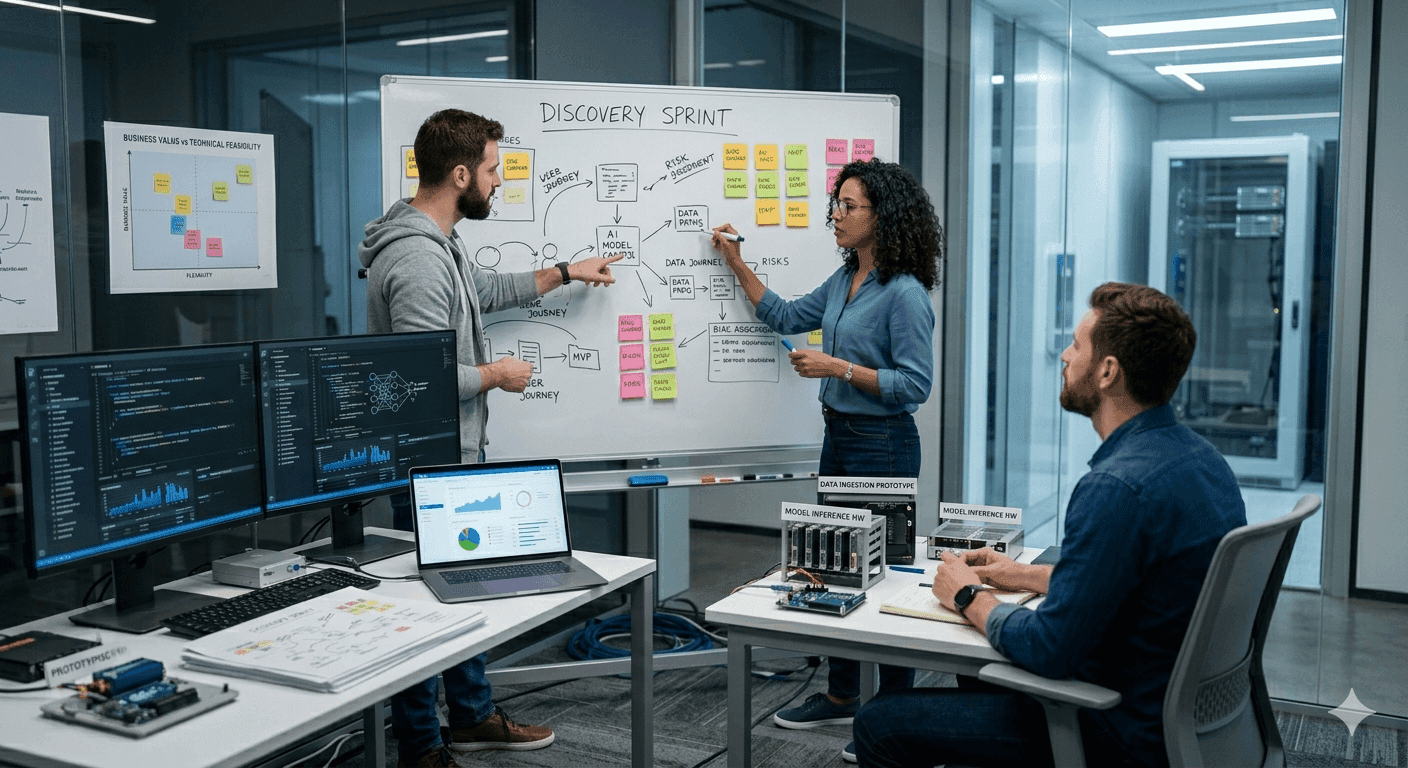
Discovery Sprint
Identify high-value AI opportunities and data constraints too complex or risky to tackle without specialist expertise, we define exactly what's viable before any code is written.
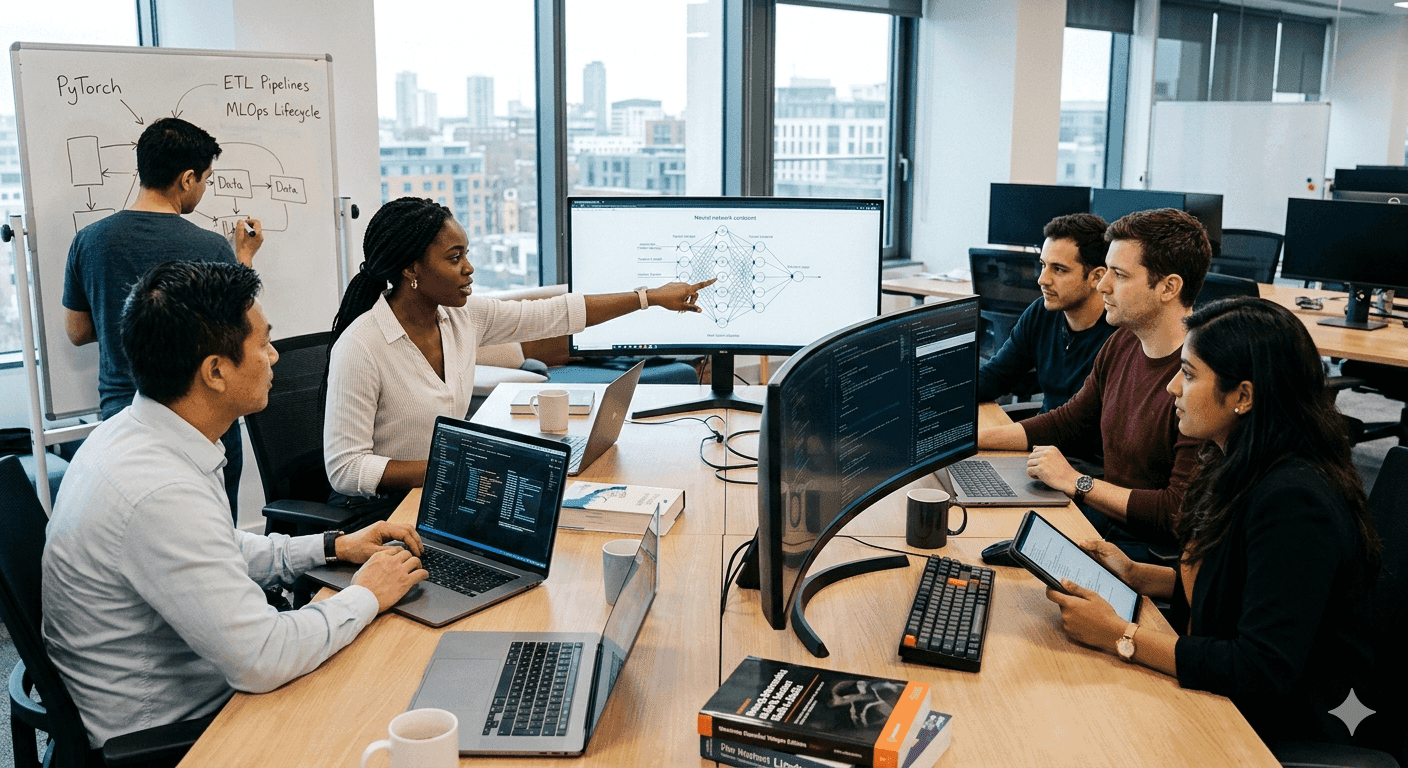
Team Formation
Assemble a focused ML engineering team with precisely the skills your project demands, model architects, data engineers, MLOps specialists, no generalist overhead, no bloated sprint cycles.
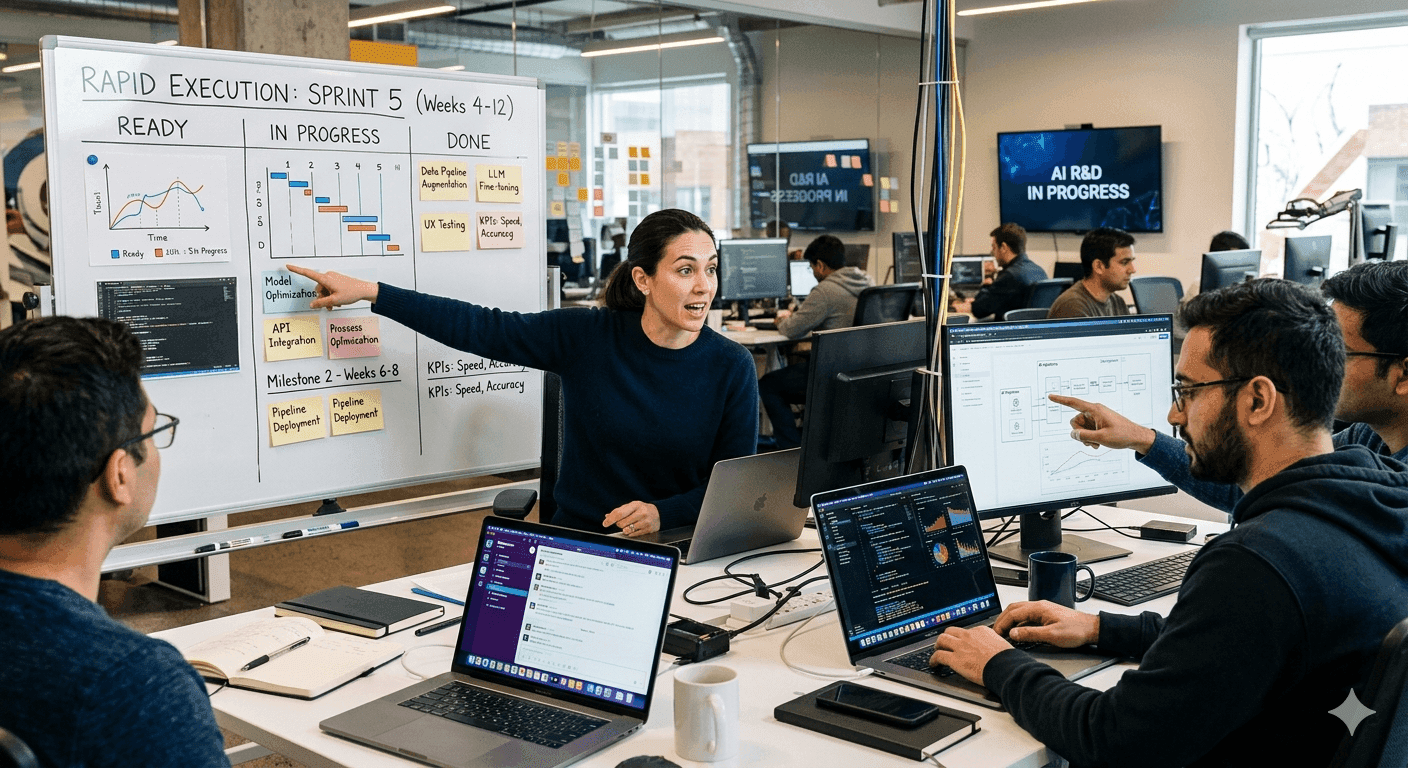
Rapid Execution
Execute in focused 4–12 week engineering sprints aligned with your budget and delivery milestones, you pay only for active, measurable engineering progress, not standing retainers.
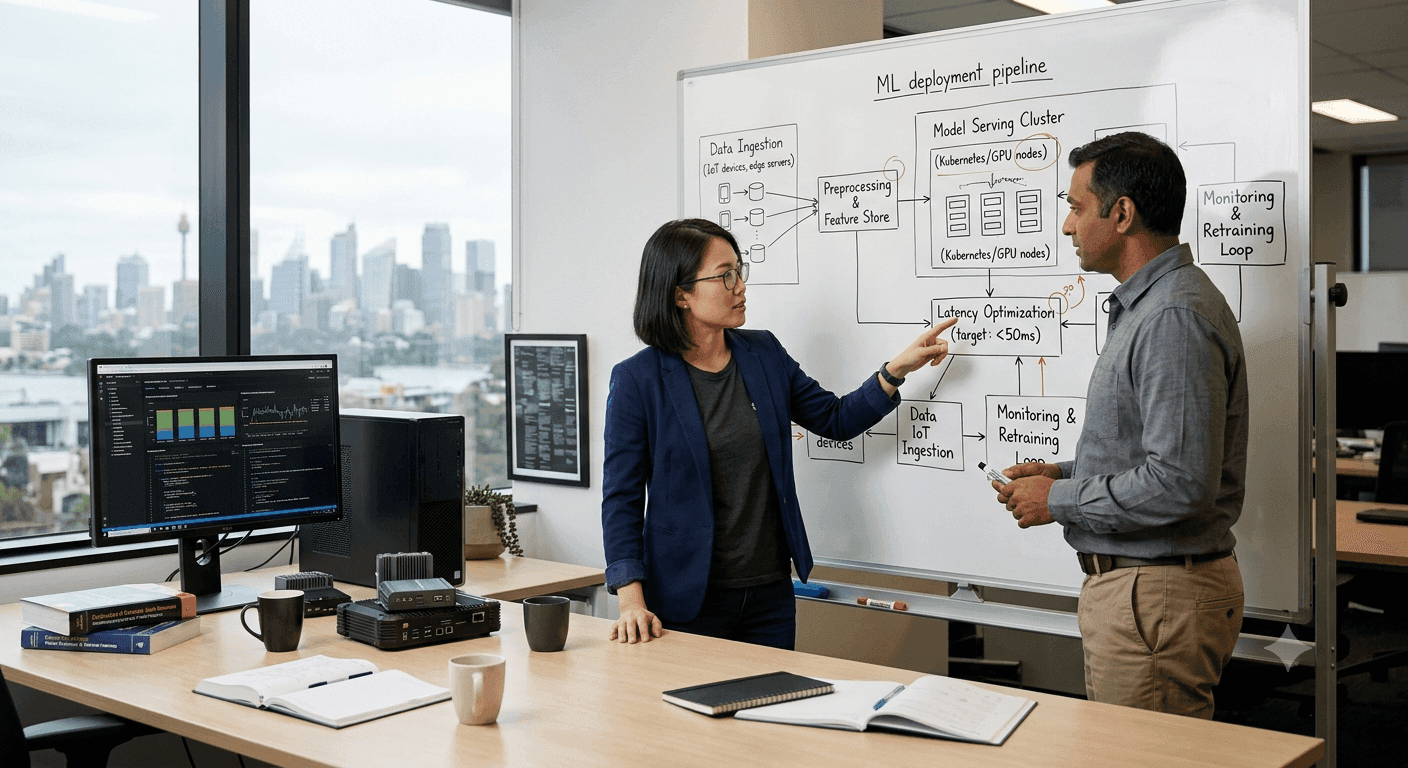
Production Architecture
Design ML systems around real-world constraints, hardware limits, data gaps, latency requirements, and Australian regulatory frameworks, so your model performs in production, not just in experiments.
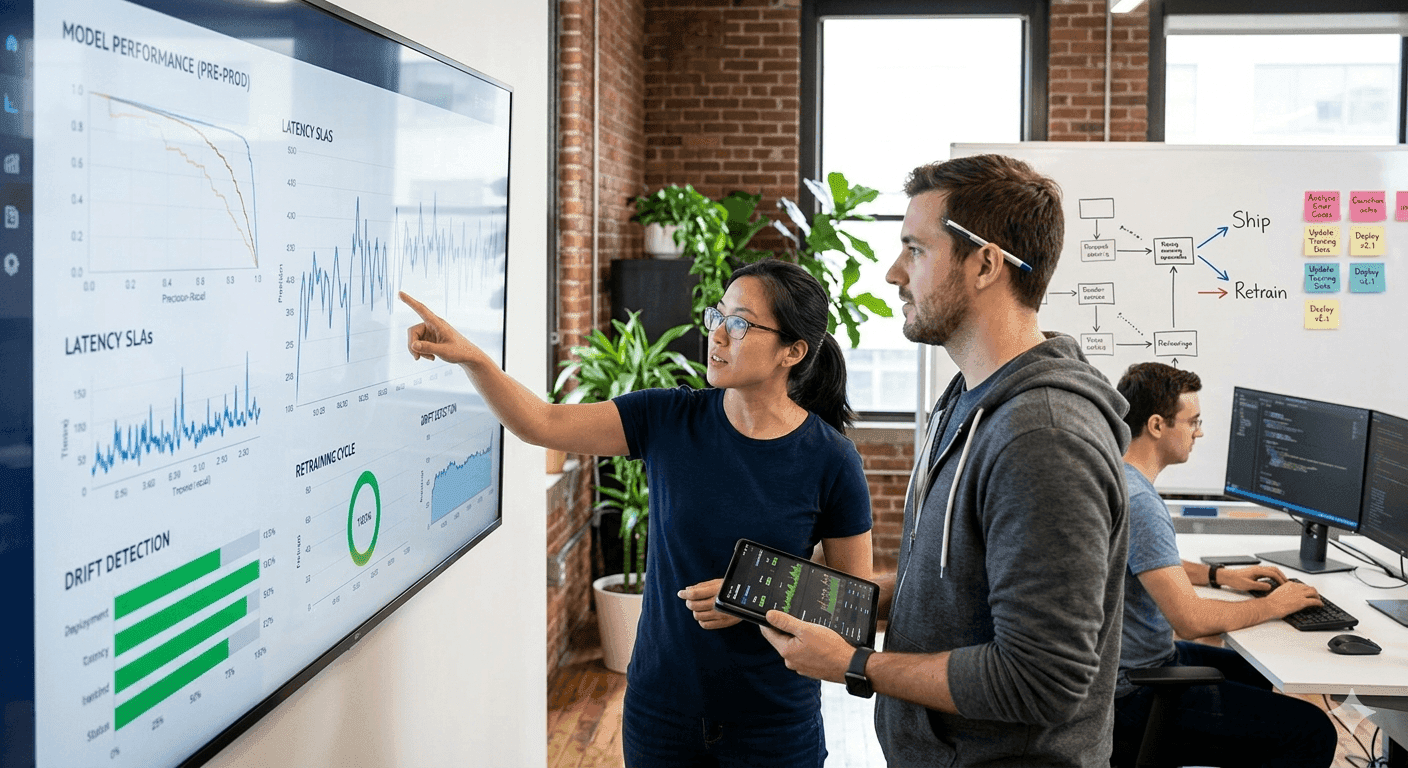
Ship & Refine
Iterate against measurable performance benchmarks at each stage until your model meets production SLAs, then monitor, retrain, and improve continuously as your data and business evolve.
Discovery Sprint
Identify high-value AI opportunities and data constraints too complex or risky to tackle without specialist expertise, we define exactly what's viable before any code is written.
Team Formation
Assemble a focused ML engineering team with precisely the skills your project demands, model architects, data engineers, MLOps specialists, no generalist overhead, no bloated sprint cycles.
Rapid Execution
Execute in focused 4–12 week engineering sprints aligned with your budget and delivery milestones, you pay only for active, measurable engineering progress, not standing retainers.
Production Architecture
Design ML systems around real-world constraints, hardware limits, data gaps, latency requirements, and Australian regulatory frameworks, so your model performs in production, not just in experiments.
Ship & Refine
Iterate against measurable performance benchmarks at each stage until your model meets production SLAs, then monitor, retrain, and improve continuously as your data and business evolve.
Build Smarter AI. Ship Faster.
Real AI Engineering Results.
Production-grade machine learning systems engineered for Australian businesses, delivering measurable accuracy gains, faster time-to-value, and AI infrastructure that scales with your business.
Client Satisfaction Rate
Client Satisfaction Rate
Model Accuracy Rate
Model Accuracy Rate
Avg Time to Production
Avg Time to Production
Reduction in Manual Work
Reduction in Manual Work
Security, compliance & certifications
Australian regulatory compliance embedded directly into every software system we build.

Australian Privacy Act 1988
Every application we build adheres to all 13 Australian Privacy Principles, data minimisation, consent architecture, access controls, and NDB breach response procedures baked in from day one.

Infrastructure Security
ACSC Essential Eight hardened, AES-256 encrypted at rest and in transit, deployed on Australian sovereign AWS or Azure regions. CREST-certified penetration testing on every production release.

Data Governance
OAIC-aligned data lineage mapping, role-based access controls, and retention schedules documented before a single line of code is written, giving your stakeholders full audit-ready traceability.

Regulatory Compliance
APRA CPS 234 & CPS 230 for financial services. My Health Records Act for healthcare. CDR obligations for open data. ISO 27001-aligned development practices across every engagement.

Not Sure Whether Your AI Use Case Is Feasible?
We run rapid 2–4 week proof-of-concept sprints to validate your AI hypothesis before any major investment, so you only build what works in production.
Book a Free AI Discovery CallMost Asked Questions
Data science focuses on analysis, exploration, and building models. AI engineering takes those models and makes them reliable, scalable, and maintainable in production, with proper pipelines, monitoring, retraining, and integration into your systems. Most AI projects fail not because the model is wrong, but because nobody built the production infrastructure around it.
A simple classification or regression model with clean data can reach production in 6–8 weeks. More complex systems involving computer vision, NLP, or multi-model pipelines typically take 12–20 weeks from scoping to live deployment. We always start with a 2–4 week POC sprint to validate feasibility before committing to a full build.
It depends on the problem. Supervised ML typically needs hundreds to thousands of labelled examples per class. Computer vision needs image datasets; NLP needs text corpora. If you have historical business data, transaction records, customer interactions, sensor readings, documents, there's almost always a viable AI use case. We assess your data in our discovery sprint and tell you exactly what's needed.
POC sprints start from $15,000–$25,000 for 2–4 week validation projects. Full production ML systems typically range from $40,000 to $150,000+ depending on complexity, data volume, and integration requirements. We provide fixed-price proposals after discovery, no open-ended retainers or surprise invoices.
Yes, integration is a core part of every project. We deliver models as containerised REST or gRPC APIs that connect to your existing platforms, whether that's your CRM, ERP, internal tools, or customer-facing applications. We handle the full integration including authentication, rate limiting, error handling, and monitoring.
All production models we deploy include monitoring for data drift, concept drift, and performance degradation. We set up automated alerts when accuracy drops below defined thresholds and build retraining pipelines that can update models, either on a schedule or triggered by performance metrics, without requiring manual intervention from your team.
Yes, we have experience delivering AI systems in healthcare (patient outcome prediction, document processing), financial services (fraud detection, credit scoring), and other regulated sectors. All systems are built with explainability, auditability, and Australian compliance requirements in mind, including Privacy Act obligations and relevant industry frameworks.
Many AI development companies stop at delivering a working model or proof of concept. AI engineering covers what happens after that: production infrastructure, monitoring, retraining pipelines, and integration into your live systems, so the model keeps performing reliably once it's actually in use, not just in a demo.