


Increase Care Capacity
Handle more clients without more staff
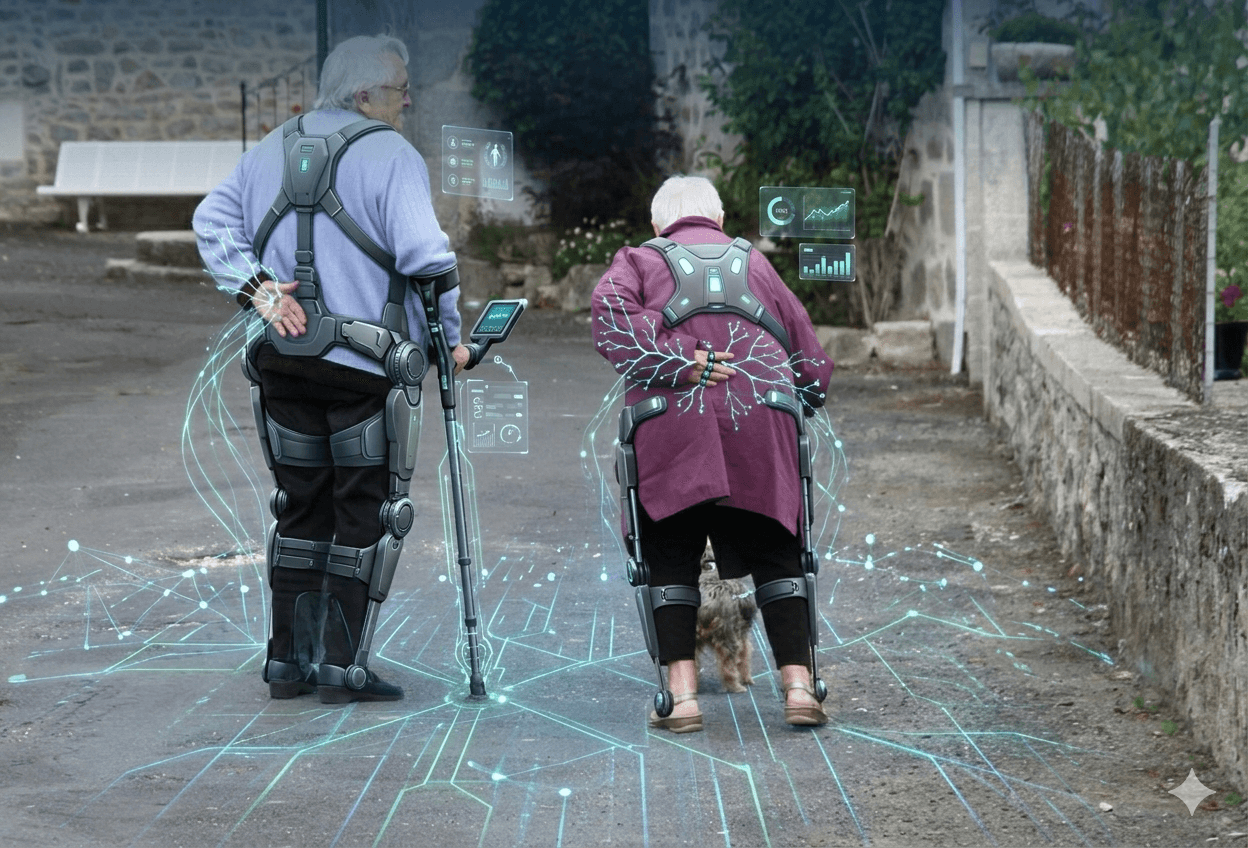
Beyond Himalaya Tech builds operational AI systems for Australian aged care and NDIS providers, automating documentation, compliance, payroll, and incident reporting. Their agentic workflows streamline point-of-care processes, improve audit readiness, and reduce administrative overhead, enabling staff to focus on delivering higher-quality care and better participant outcomes.
Get Your AI AgentYour AI agent auto-generates progress notes, manages reportable incidents, tracks AN-ACC documentation, and keeps your organisation audit-ready for the ACQSC without burdening your support workers.
NDIS Progress Report
Client: Robert Williams
Total Service Hours
February 2026
68.5 hours
✓ Tracked
Budget Utilization
Core Support funding
$3,425 / $5,000
✓ On track
Goal Progress
NDIS plan goals
4 of 5 met
✓ Strong progress
Compliance Check
NDIS requirements
Compliant
Audit-ready
Report generated in 4 min 32 sec



When support workers spend less time on progress notes, incident reports, and rostering admin they spend more time with participants. That's what AI agents deliver for Australian aged care and NDIS providers.
0.0X
more productive than human agents
0%
reduction in doc time
0%
medical-grade security built-in
$0K+
saved annually per organization
auto-processes client referrals, creates care plans, and schedules assessments without manual data entry.

 30-50% faster onboardingFaster service allocationHigher client satisfaction scores
automatically matches staff to clients based on skills, availability, and compliance requirements.
 Reduced overtime costsLower burnout riskMore stable service delivery
flags incidents automatically, completes reportable incident forms, and triggers escalation workflows.

 30-50% faster incident reportingImproved regulatory complianceStronger quality assurance
For a closer look at workforce automation in practice, see our case study on workforce rostering and compliance software for aged care and disability teams, or read more on how AI is helping Australian aged care and disability providers automate this work.
When your support workers are drowning in progress notes, NDIA billing claims, and incident reports participants miss out on care. AI agents handle the documentation burden so your team can focus on what matters most.
Handle more clients without more staff
Less overhead, higher profitability
No need for 5 more people
While competitors add one chatbot, you deploy an entire AI-powered operation that works 24/7, learns from your data, and gets smarter every month.
The NDIS Commission does not charge an application fee. Providers must pay an approved quality auditor for the required audit, and the price depends on the provider’s size, registration groups and audit pathway.
You should also allow for worker screening, insurance, internal preparation and any required mid term audit. Some registration groups require certification rather than verification, so confirm your pathway before applying.
The exact audit price is not fixed. It varies according to the scope and complexity of the audit. Registration is therefore an ongoing compliance cost, not a one off expense.
The amount varies by service type, but documentation can take a significant part of a support worker’s day.
For example, 50 workers spending 30 minutes a day on documentation across five days equals 125 hours per week. At two hours per day, the same workforce would spend 500 hours per week.
The most useful starting point is to measure your own team’s time by comparing paid shift hours with participant facing hours. This shows how much time is being spent on documentation, searching for information, correcting records and completing follow up tasks.
NDIS auditors review your policies and then test them against participant files and workforce records. They want to see evidence that your systems were followed in practice.
Common documents include:
A common audit finding is not a missing policy. It is a policy that is not reflected in the participant’s file.
Aged care compliance automation captures evidence as care is delivered instead of requiring staff to reconstruct it before an audit. The strengthened Aged Care Quality Standards commenced under the Aged Care Act 2024 on 1 November 2025.
The system can connect care plans, incidents, worker credentials, care minutes, registered nurse coverage, feedback and complaints. It can also flag missing information, upcoming deadlines and records that require review.
The practical benefit is that evidence stays current, connected to the individual receiving care and easier to retrieve during an audit. It helps providers demonstrate not only that a policy exists, but that it was followed in practice.
NDIS provider automation uses AI and workflow tools to handle routine administration, including progress notes, incident reports, rostering and compliance evidence. It connects to the software you already use and produces documentation as work happens rather than after it.
A typical workflow captures information at the point of care through voice or a short structured form. The system then drafts the record against the relevant NDIS Practice Standards, flags missing information and sends it to a qualified staff member for review before anything is finalised. Each record can retain a trail showing who wrote, edited and approved it.
Unlike a generic AI tool, NDIS automation can be configured around Australian disability service requirements, including participant goals, reportable incidents and audit evidence. Beyond Himalaya Tech builds these systems for Australian providers, with Australian hosting where required and integrations that work with your existing software.
Yes. The platform manages PRODA (now myID and RAM) access and submits bulk claims to the NDIA portal, and checks budgets and plan periods before lodging to prevent common SC-007 rejections.
Aged care compliance software helps providers meet the Aged Care Quality Standards by capturing and reporting the documentation the ACQSC requires. BHT automates progress notes, AN-ACC tracking and SIRS incident reporting so records are created accurately as care happens.
NDIS compliance software helps registered providers meet the NDIS Practice Standards by managing claiming, worker screening, incident reporting and documentation. BHT's version automates this with AI agents submitting NDIA claims (provider access is now through myID and RAM, which replaced PRODA), validating SCHADS payroll, and flagging notifiable incidents automatically. For features, pricing and a vendor checklist, see our 2026 NDIS compliance software buyer's guide.
Initial delivery typically runs 12–16 weeks, and most providers see documentation savings within the first weeks of go-live. Cost is scoped to your sites and the workflows you automate contact us for a quote.
Yes. Systems are built with security designed in and can be deployed privately so confidential participant, resident, health and payroll data stays in your environment. You retain full ownership.


